
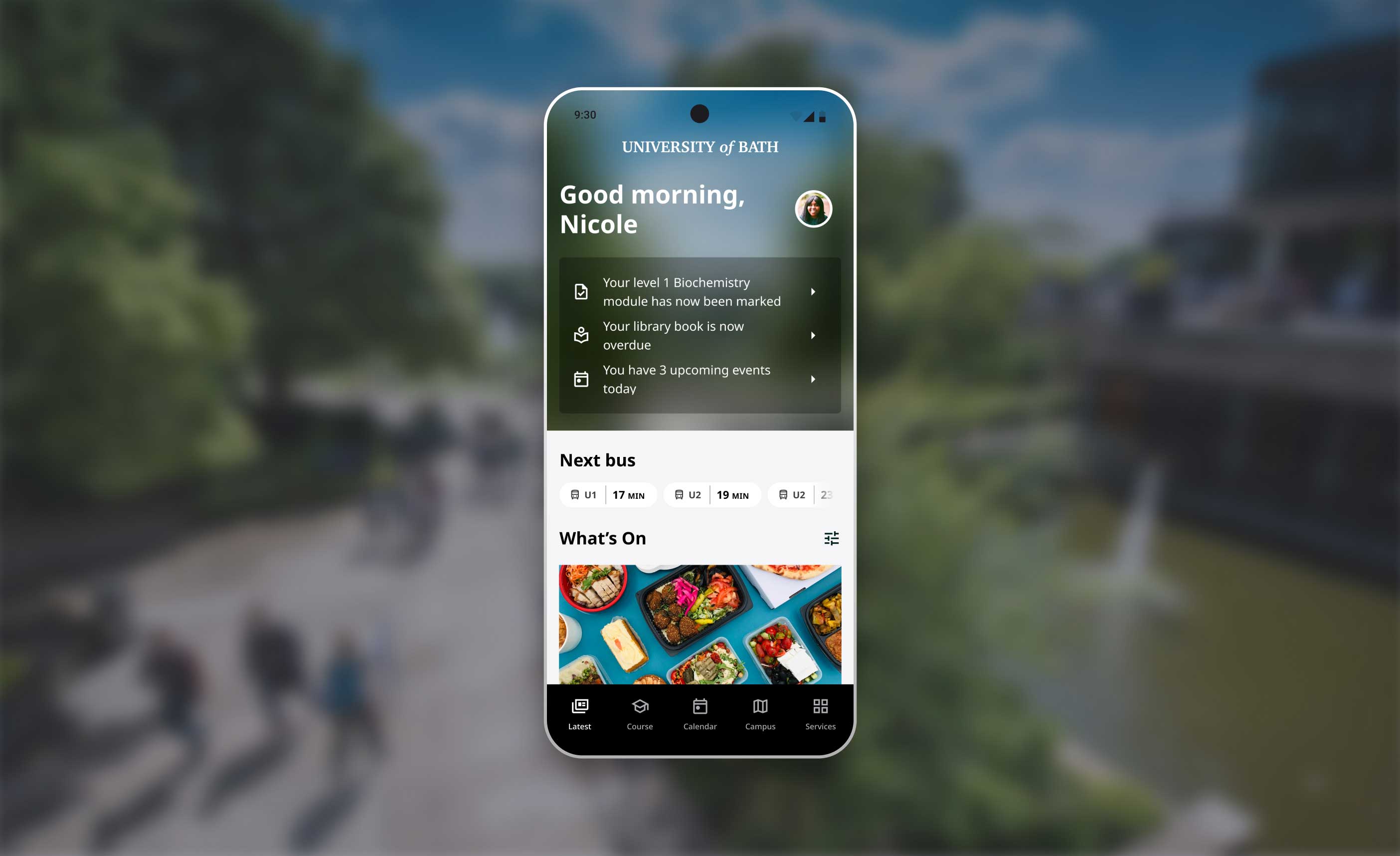
Creating an app that helped aggregate the many disperate facets of student life.
xx

The approach to this discovery work began with a meticulous fact-finding process, achieved through stakeholder interviews and a comprehensive feasibility study. Subsequently, three rapid design concepts were introduced to foster alignment among teams, each exploring potential feature sets. To distill the research findings and conceptual ideas into the foundation of a coherent roadmap, the team used the three lenses of innovation. To ensure efficiency in the process, a dual-track design and development model was adopted, allowing for concurrent progress and integration of insights.
Through our research we found that students don’t get the most out of their time whilst studying at the University of Bath. They encounter difficulties in staying informed about campus events and activities, locating available facilities, and effectively managing their time.
To mitigate risks during development, we implemented a de-risking strategy that involved conducting 5-10 user interviews weekly throughout the development process. Additionally, we incorporated fortnightly quantitative feedback collection via prototype surveys. These two research approaches played a pivotal role in gathering insights on initial concepts, validating detailed designs before coding, and gaining a deeper understanding of user pain points related to previously identified epics.Furthermore, to maintain transparency and collaboration, we organized sprint reviews and product demos at the conclusion of each sprint. These sessions provided valuable opportunities for stakeholders to provide feedback and ensure alignment with project objectives.
The rollout plan followed a strategic approach centered on prioritisation, considering both user needs and technical feasibility. To ensure a robust start, the closed alpha release focused on implementing the most crucial features, which were then refined and enhanced for the open beta release through iterative processes. Ongoing development was guided by a dynamic Jira backlog and a continuous stream of creative ideas.Once the Minimum Viable Product was well-defined and the production environment was operational, we shifted our focus towards crafting a forward-looking design. This future-facing design provided a holistic vision of how the complete feature set would seamlessly integrate into the product, aligning our efforts with long-term goals and user expectations.
The app was designed to utilise the iPhones in-built Lidar sensor to map out the room and measure ambient light, allowing the software to tailor the light quality to the specific needs of the space and occupant.

During development we designed a range of health related features that made the product really stand out in the ever growing smart lighting market.

Understanding preset scenes have always been a pain point for smart light users, so we developed a new way of representing them using the design language we established with the Dynamic Ring (above). Intuitive visuals such as thickness correlated to brightness, and colour of the ring represented hue of the lights.


Throughout development we extensively tested the concept, features and our design decisions to ensure we were meeting the needs of our users. This came in many forms, from interviews, prototype testing to quantitive online surveys.

Along side the build, a component library was established, enabling assets to be easily managed, deployed and reused across other products in Delos' growing portfolio,


My role was Lead Designer and Creative Director on the project. From early concept to delivery I was responsible for all areas, from setting up the design system, defining art direction and working from high level layouts through to detailed design patterns and animations.